Security Systems
Is Your Alarm Still Working? PSTN Switch-Off Guide
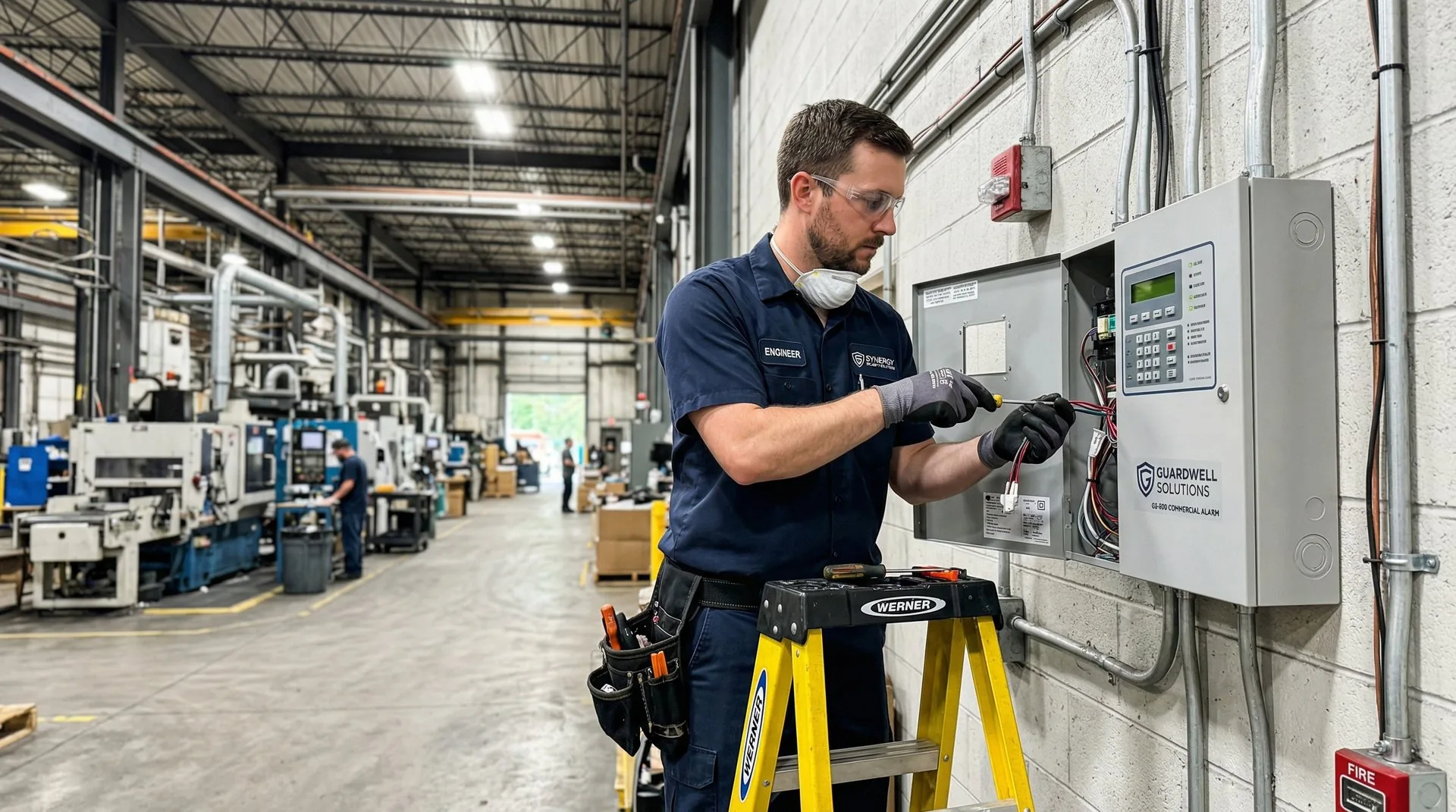
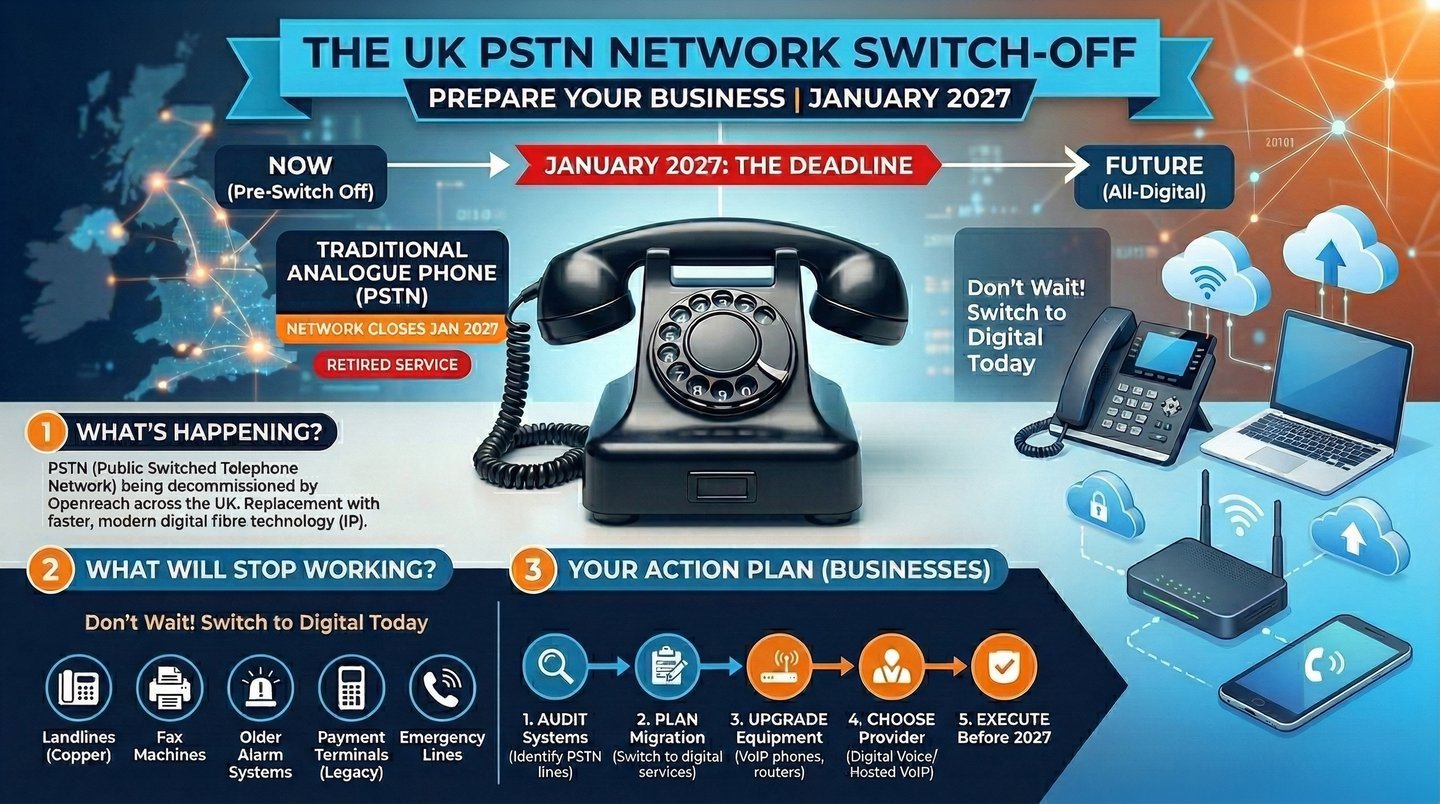
The PSTN network shuts down in January 2027. If your fire or intruder alarm uses an old phone line, it may need a signalling review.
Security Systems
The PSTN network shuts down in January 2027. If your fire or intruder alarm uses an old phone line, it may need a signalling review.
If your monitored alarm still depends on PSTN, legacy Redcare-style signalling, or an older mobile communicator, the panel can look healthy while the signal path has failed. Ask for written confirmation of how the alarm communicates, who receives the signal, and what backup route protects it before January 2027.
Here is an uncomfortable question.
When did you last have confirmation that your intruder alarm or fire alarm monitoring is actually communicating with the Alarm Receiving Centre?
Not "the alarm tested fine last month." Not "it went off when I triggered it." But confirmation that the signal pathway from your building to the monitoring centre is intact and functioning right now.
If your system relies on an old BT landline or a legacy signalling service to communicate, there is a real possibility the answer is: you do not know. And in some cases, the system has already stopped communicating entirely.
This is not scaremongering. It is the direct consequence of three overlapping changes to UK telecoms infrastructure that have been rolling out for several years and are now, in 2026, arriving at their most critical phase.
The PSTN (Public Switched Telephone Network) is the analogue copper telephone infrastructure that has underpinned voice and data communications in the UK for well over a century.
It is estimated that around four million fire and security systems in the UK communicate to Alarm Receiving Centres using the PSTN network. That is a significant number. And the network those four million systems depend on is being switched off.
The PSTN is failing due to a lack of parts and, increasingly, environmental factors such as storms or heat-related faults. Ofcom reported that 2024 saw a 45 percent increase in the number of PSTN incidents reported.
Openreach says the analogue phone network will be retired by 31 January 2027. If a business alarm depends on an old copper service, the communication route needs checking before that date rather than after a fault appears.
2026, Openreach: more than half a million business lines still needed to migrate with 12 months remaining before the PSTN switch-off.
2026, Openreach: critical hardware including fire alarms, burglar alarms, payment terminals, lift lines, and CCTV network lines may need migration from legacy services.
"Review your assets" Openreach, Time for a big switch-up, February 2026.
What this means for facilities managers: do not only ask whether the alarm panel works. Ask how the alarm sends signals, who receives them, and what happens if the phone, broadband, or mobile path fails.
The PSTN switch-off does not exist in isolation. It is part of a broader shift away from analogue infrastructure, and three specific changes are directly relevant to business alarm systems.
This one matters most for businesses with monitored alarm systems, and it is the change that has caught the most people off guard.
BT Redcare was one of the most widely used alarm signalling services in the UK. Thousands of commercial fire alarms and intruder alarms used it to communicate activations to monitoring centres. BT Redcare operations closed in 2025, well before the final 2027 switch-off deadline.
Legacy Redcare-style signalling and old phone-line diallers need a documented migration plan. If monitoring is part of your insurance or fire safety arrangements, get written confirmation that the replacement path meets the required response and fault reporting standard.
If your alarm uses BT Redcare and you have not migrated to an alternative signalling solution, your system may look operational from the front panel. The alarm will still sound if triggered. But the signal to the monitoring centre, the part that actually calls for help, may not be going anywhere.
Your alarm is, in that scenario, a very expensive noise maker.
Many alarm systems, particularly those installed or upgraded in the 2010s, were fitted with GSM communicators that transmitted alarm signals over older mobile networks.
Some legacy alarm communicators and wireless security devices still rely on ageing mobile technology. Some systems will not make it obvious at the panel when the SIM or mobile path has stopped communicating. This is one of the awkward causes of silent system failure in older monitored alarm systems.
Silent system failure means the system appears to work locally. It tests fine at the keypad. The sounder may activate. But the communication path, the part that connects the building to help, may not be doing its job.
Ask the installer to confirm the communicator technology, the active mobile network, the expected withdrawal risk, and whether a 4G, IP, or dual-path upgrade is needed.
In practical terms, in many exchange areas, the "stop-sell" is already active: meaning no new PSTN or ISDN services can be purchased, and no system takeovers or modifications involving PSTN lines are permitted.
This means that even if you wanted to maintain your existing PSTN-dependent alarm signalling, you may not be able to do so when it next requires modification or takeover by a new contractor.
The practical implications depend on how your alarm system currently communicates. Here is a breakdown by signalling method:
| Current route | Likely exposure | Next step |
|---|---|---|
| PSTN only, single analogue phone line | High exposure to withdrawal, line changes, and provider migration. | Book a signalling survey and price an IP, 4G, or dual-path replacement. |
| Legacy Redcare-style route | Service continuity depends on the replacement already agreed and commissioned. | Ask for written confirmation from the alarm company or monitoring provider. |
| Older GSM single path | Network withdrawal or weak signal can remove remote monitoring without an obvious local fault. | Confirm the network technology and test live signal receipt at the ARC. |
| Dual-path IP and 4G | Usually stronger, subject to grade, signal strength, broadband resilience, and maintenance. | Keep test records and review it during planned maintenance. |
Alarm signalling grades, designated DP1 through DP4, define how quickly a fault in communication between a business alarm system and the Alarm Receiving Centre is detected.
Think about that from a practical standpoint. If your system is running DP1 signalling and the communication path fails at 9pm, you might not know until 10pm the following evening.
A modern, future-proof signalling solution for a commercial or industrial alarm system typically involves:
Everything above applies equally to fire alarm systems that use remote signalling to an ARC or to the fire and rescue service. If your fire alarm uses PSTN-based signalling, the same urgency applies.
Your fire alarm's signalling arrangements should be reviewed before the legacy service is withdrawn. If your system is due a service, raise this explicitly with your engineer or include it in your fire and security maintenance review.
A significant proportion of businesses have alarm systems that were installed or upgraded several years ago. The business owner knows the system is there, knows it is serviced, and assumes it is working. The specific signalling technology it uses, and whether that technology is still functional, is not something they have ever had reason to think about. That assumption is now risky.
If you are not certain how your system communicates with the monitoring centre, call your installer or maintenance contractor this week. If you do not have a maintenance contractor, that is a separate problem worth addressing, and one we can help with.
Contact FIDEC for a free assessment of your alarm signalling: 0333 3662 007 or info@fidecss.co.uk.
It can affect any business alarm that still sends signals through an analogue phone line, legacy dialler or old monitoring route. The alarm may still work locally while remote signalling becomes unreliable or stops altogether. Businesses should check fire alarms, intruder alarms, lift phones, panic alarms and any other connected safety system before the switch-off deadline.
Check whether the alarm panel or communicator is connected to an analogue phone line, old dialler, Redcare-style unit or line rental that exists mainly for alarm monitoring. If records are unclear, ask an alarm engineer to trace and test the signalling path. Do not rely on the panel looking normal because local operation does not prove remote communication.
Most replacements use IP, mobile or dual-path signalling, depending on the site risk, monitoring requirement and available connectivity. A low-risk site may need a simpler communicator, while monitored commercial alarms often benefit from a resilient backup path. The replacement should be commissioned, tested and documented so the business knows who receives each alarm and fault signal.
No. Waiting until January 2027 risks rushed work, limited installer availability and avoidable gaps in monitoring. The better approach is to identify affected systems now, agree priorities and upgrade the highest-risk sites first. This is especially important for monitored fire alarms, intruder alarms, vacant premises, multi-site estates and buildings with insurer conditions.