Security Compliance
Martyn's Law: UK Business Premises Security Checks
What Martyn's Law means for UK premises security in 2026, including thresholds, duties, CCTV, access control, lockdown and evacuation planning.
Security Compliance
What Martyn's Law means for UK premises security in 2026, including thresholds, duties, CCTV, access control, lockdown and evacuation planning.
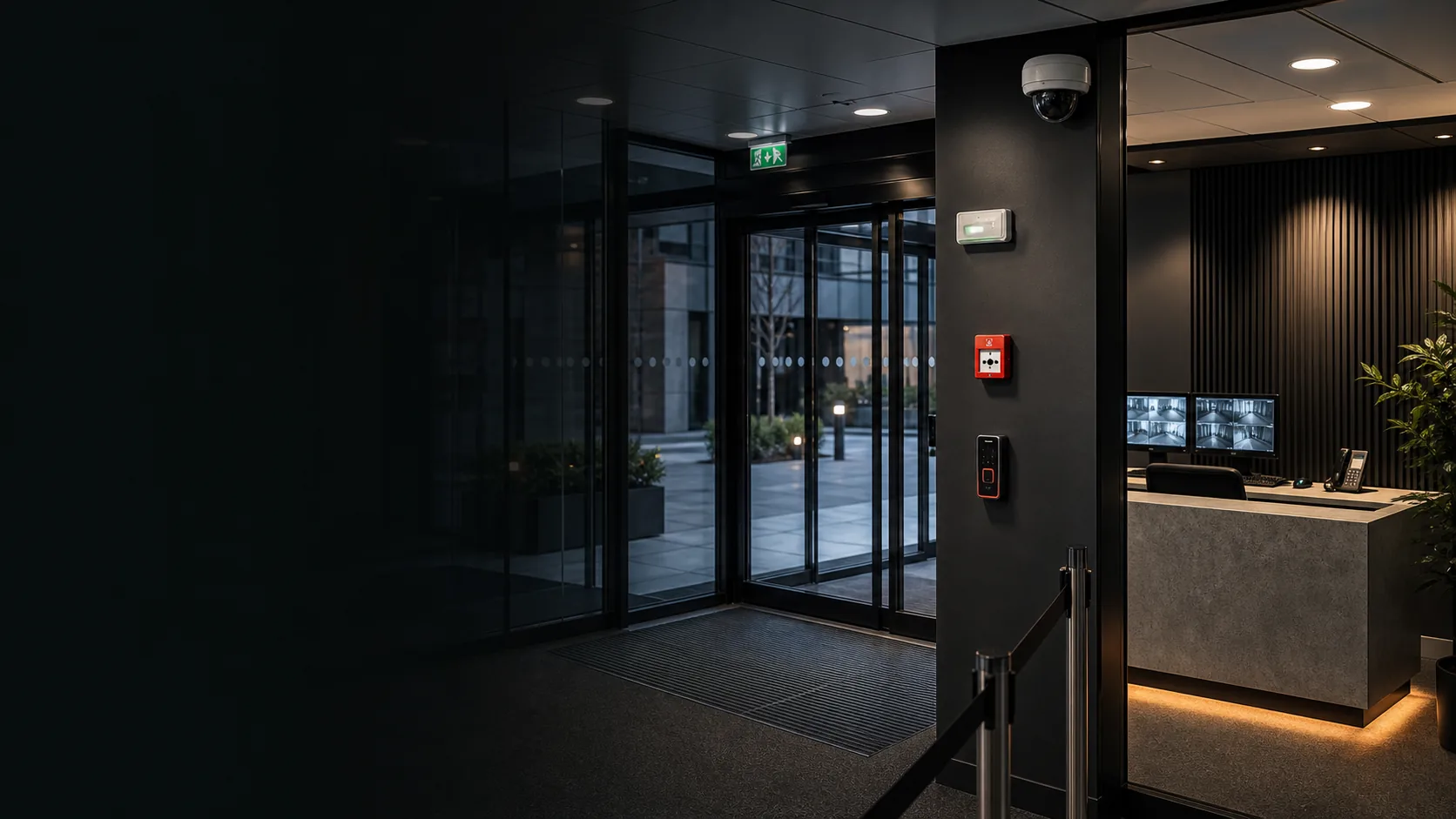
Martyn's Law preparation should start with the building as it is: public numbers, entrance control, CCTV coverage, staff communication, evacuation, invacuation and lockdown. Do not buy more locks first. Check whether the systems you already have can support the procedure without creating a fire safety problem.
Martyn's Law has moved from "something that might happen one day" to something UK businesses need to start planning around properly.
The Terrorism (Protection of Premises) Act 2025 received Royal Assent on 3 April 2025. The Home Office published section 27 statutory guidance in 2026, and the Security Industry Authority is the regulator.
The Act is not in force yet. The SIA says commencement is expected in spring 2027. Its final section 12 regulatory guidance and consultation response were still due in autumn 2026 when this guide was reviewed, so businesses should check the current GOV.UK collection before making a final scope decision.
For FIDEC's kind of clients, this is the important bit: Martyn's Law is not limited to writing a policy and putting it in a folder. It is about whether your premises can actually respond when something serious happens at the front door, in the car park, at reception, or during a busy public event.
Search interest around Martyn's Law has risen because business owners, facilities managers, schools, venues, landlords and event operators are all trying to answer the same uncomfortable question: does this apply to us?
The 2026 Home Office guidance and SIA updates explain the thresholds, duties and regulatory approach in more detail. Businesses should use those sources because implementation information is still being updated.
And the practical examples matter. A retail unit, training centre, hotel, leisure facility, place of worship, education site, community venue or commercial building used for public events can all end up looking at the same core issues: entry control, CCTV coverage, staff communication, evacuation, invacuation and lockdown.
Broadly, Martyn's Law applies to qualifying premises and qualifying events where members of the public may be present. The main threshold most businesses will hear about is 200 people.
There are exceptions and special cases. Places of worship and many education settings are treated differently, even where numbers exceed 800. Some transport premises are excluded because they already sit under other security regimes. So, no, you should not rely on a one-line summary from LinkedIn to decide whether you are in or out.
If your premises regularly has members of the public on site and can reach 200 people at busy times, you should assume Martyn's Law is worth looking at now. Waiting until commencement is a poor plan.
The statutory guidance is very clear that every qualifying premises or event will have a responsible person. That is the person, company or organisation with control of the premises for the relevant use.
You can delegate tasks. You can ask a fire and security contractor to review your systems. You can ask consultants to help with procedures. But the legal responsibility itself does not transfer to the contractor.
That should sound familiar. Fire safety works in much the same way. You can bring in competent people, and often should, but the responsible person still needs to understand what has been put in place and why.
For standard tier premises, the focus is on public protection procedures. In plain English, staff need to know what they would do if an attack happened or was suspected.
The guidance talks about procedures including evacuation, invacuation, lockdown and communication. These procedures connect directly to the building and the systems inside it.
This is where a paper plan starts meeting reality. If your reception team cannot lock the right doors, if your CCTV does not cover the entrance properly, if staff cannot tell what is happening outside, or if your fire alarm evacuation plan conflicts with a lockdown plan, the procedure is fragile.
Enhanced tier premises have additional requirements. The Act expects public protection measures, so far as reasonably practicable, to reduce vulnerability to an attack and reduce the risk of physical harm if one happens.
For larger premises, this is where security hardware, fire safety systems and operational procedures start to overlap. You may need to look at:
There is a trap here. Some businesses will hear "security" and immediately think "more locks". That is not the right starting point. A badly designed lockdown arrangement can create a life safety risk. A door that should release for escape cannot simply be treated like a normal security door.
CCTV is going to come up in a lot of Martyn's Law conversations. That is understandable. It gives staff visibility of entrances, external areas and suspicious activity before someone is already at the desk.
But CCTV is not magic. A camera facing the wrong way, a recorder no one can access, or a system that only the installer knows how to use will not help much during a live incident.
A useful review should ask simple questions:
Access control is one of the most useful systems for protective security, but it is also one of the easiest to get wrong if nobody thinks about escape routes.
Under normal conditions, controlled doors help keep unauthorised people out of private areas. During an emergency, the same doors may need to release, remain secured, or be controlled in stages depending on what is happening. Fire alarm activation, emergency door release, staff override and lockdown all need to be thought through together.
If you have magnetic locks, electronic strikes, turnstiles, shutters, intercoms or reception-controlled doors, this is not a theoretical issue. It is exactly the sort of detail that should be checked before procedures are signed off.
Most failures in real emergencies are not caused by exotic problems. They are caused by ordinary things nobody checked.
Martyn's Law will push businesses to look at protective security, but the first useful step is often basic housekeeping. Get the existing systems working properly. Know what you have. Know what is missing. Then decide what needs upgrading.
If you are responsible for a premises that may fall within scope, start with a practical site review rather than a panic purchase.
Walk the building and ask:
That gives you a useful starting point. It also prevents the most common mistake: buying equipment before understanding the risk.
FIDEC cannot make a business compliant with Martyn's Law by installing one product. Nobody credible should tell you otherwise.
What we can do is help you understand whether the systems in your building support the procedures you are likely to need. That means checking CCTV coverage, access control, intruder alarms, fire alarm interfaces, door release arrangements and maintenance records as part of a joined-up review.
If your premises is publicly accessible, regularly busy, or used for events, now is the right time to look at it. Not in a panic. Not with a box-ticking mindset. Just properly.
Contact FIDEC Security Solutions for a free site survey or premises security review. Call 0333 3662 007 or email info@fidecss.co.uk.
No. Martyn's Law is aimed at qualifying premises and events where public access and capacity thresholds are met, so it will not apply to every small office, warehouse or private workplace. Businesses should still check whether the public can access the site and how many people may be present. The safest first step is a premises-by-premises review.
Start with practical checks around public access, entrance control, staff awareness, CCTV coverage, intruder alarms, lockdown thinking and how suspicious activity would be reported. The aim is to understand how people enter, move around and leave the premises. Good security planning begins with the site layout and operating pattern before equipment is specified.
Yes, CCTV and access control can support preparation by improving visibility, restricting staff-only areas and giving managers clearer information during an incident. They are not a complete answer on their own because procedures, training and communication still matter. Review technology alongside front-of-house routines, delivery access, visitor routes and staff escalation plans.
Review premises security when public access changes, occupancy increases, opening hours change, events are introduced or the site has repeated incidents. It is also sensible to review before refurbishment, tenancy changes or insurance renewal. A short review can separate low-cost procedural improvements from equipment work that needs planning and budget.