Alarm Signalling
Alarm Signalling Upgrade Manchester
Alarm signalling upgrade in Manchester for businesses using old phone lines, PSTN diallers, IP or 4G monitoring. Check fire and intruder alarm communications.
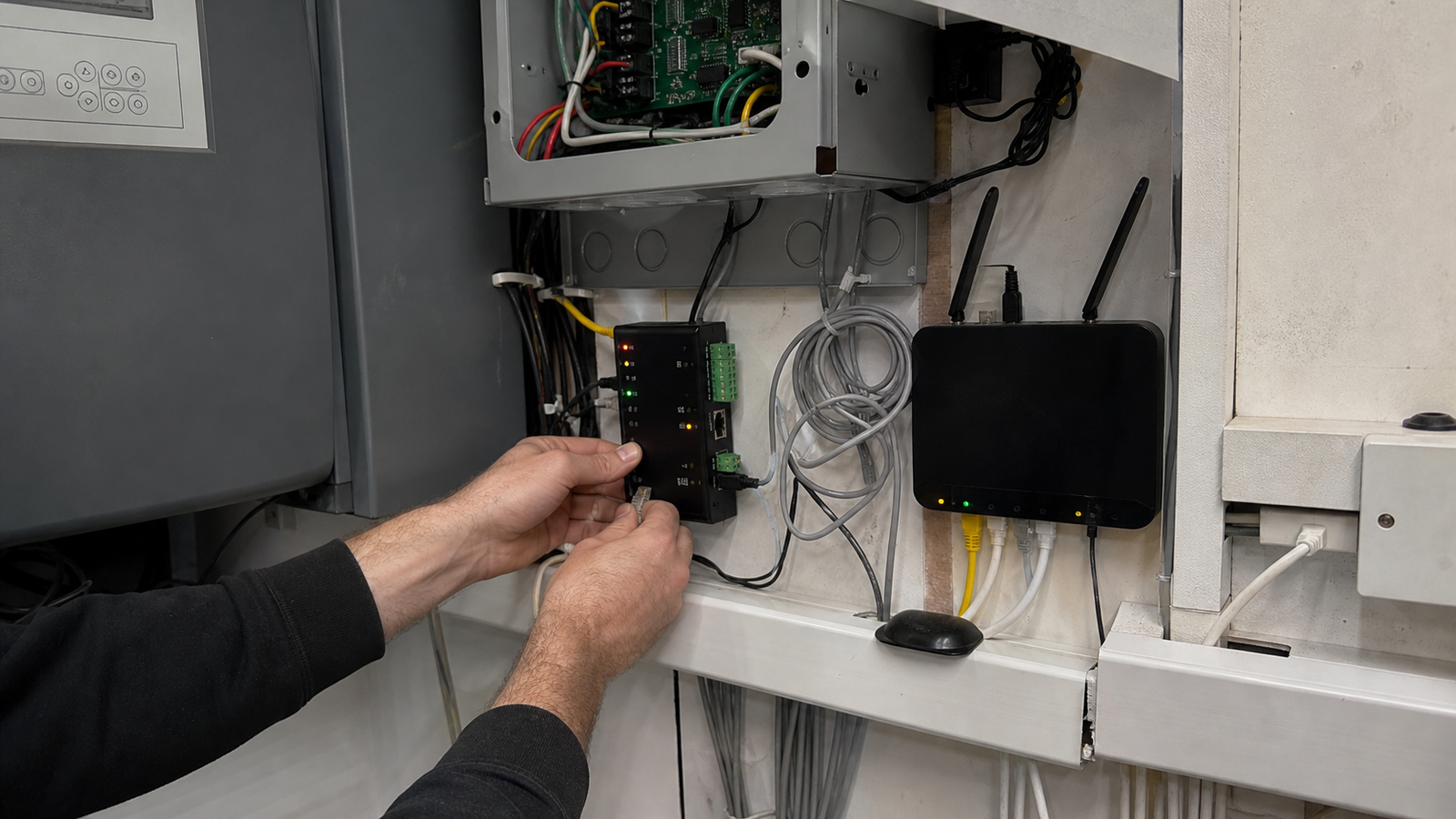
Alarm Signalling
Alarm signalling upgrade in Manchester for businesses using old phone lines, PSTN diallers, IP or 4G monitoring. Check fire and intruder alarm communications.
If your fire alarm or intruder alarm still sends signals over an old analogue phone line, do not wait until the PSTN switch-off becomes urgent. A signalling upgrade may be a small job, but it protects monitoring, insurer confidence, and the record that proves your system is still doing its job.
Alarm signalling is the part of a fire alarm or intruder alarm that most people only think about when it fails. The panel may still light up. The sounders may still work. The keypad may still set and unset. But if the system cannot send a reliable signal to an alarm receiving centre, keyholder platform, monitoring provider, or response service, the building is not as protected as it looks.
That matters for Manchester businesses because older alarm systems often still rely on analogue phone lines, legacy diallers, single-path signalling, or communications that were installed years before the PSTN switch-off became a boardroom problem. Openreach says the UK Public Switched Telephone Network is due to be switched off in January 2027. Any monitored alarm still depending on that network needs checking before the deadline starts causing rushed decisions.
It should be useful if you look after a commercial premises in Manchester, Salford, Trafford Park, Stockport, Oldham, Rochdale, Bury, Bolton, Tameside, or the wider North West.
An alarm signalling upgrade replaces or improves the way your alarm communicates. In many cases, that means moving from an old phone-line dialler to IP, 4G, 5G, or dual-path signalling. The aim is simple: when the alarm activates, faults, or needs supervision, the right people are notified quickly and the communication route is not dependent on ageing analogue infrastructure.
The practical rule: if your monitored fire alarm or intruder alarm has a phone line connected to it, book a signalling check. You may not need a full alarm replacement, but you do need to know how the signal is currently leaving the building.
Alarm signalling is the communication path between your site and the people or systems expected to respond. It can be used by fire alarms, intruder alarms, panic alarms, CCTV monitoring systems, access control alerts, and some door entry systems.
For a commercial intruder alarm, signalling may notify an alarm receiving centre, keyholders, a guarding provider, or the police response process where a URN and compliant confirmation are in place. For fire alarm systems, signalling may support monitoring, fault reporting, out-of-hours response, and management of life safety risks. For multi-site operators, signalling can also give central visibility across several buildings.
The equipment varies, but the buying question is always the same: if this building has an alarm event at 2am, who finds out, how quickly do they find out, and what happens if the main communication route is down?
The PSTN switch-off is the obvious reason. Older alarm diallers were often fitted to standard phone lines because that was the normal option at the time. As those lines are withdrawn, moved to digital voice, or changed by telecoms providers, alarm signalling can become unreliable or stop working altogether.
There are other reasons too. Broadband routers get replaced. Tenants change. Fire alarm panels are upgraded but the communicator is left alone. Intruder alarm monitoring contracts roll on for years without anyone checking the signalling route. A business may move from one insurer to another and only then discover that the existing alarm communication path no longer matches the policy wording.
GOV.UK says the responsible person for non-domestic premises must put in place and maintain appropriate fire safety measures. The FIA also says the recommended period between successive fire alarm inspection and servicing visits should not exceed six months. Signalling belongs in that maintenance routine because it affects fire safety, monitoring and response.
There is no single best route for every site. The right option depends on risk, monitoring requirements, insurer wording, local mobile signal, network resilience, and what the existing panel can support.
IP signalling uses a broadband or network connection. It can be fast and cost-effective, but it depends on the local network, router, power, and internet service. For some sites, it is enough. For higher-risk premises, it is usually better as one part of a more resilient design.
Mobile signalling uses a cellular path, often 4G or 5G. It can avoid dependence on a fixed line, but the signal strength should be checked where the communicator will actually sit. A strong signal by the front door does not prove the plant room or comms cupboard is suitable.
Dual-path signalling uses two communication routes, such as IP plus mobile. If one path fails, the other can still transmit. This is often the sensible choice for monitored intruder alarms, higher-risk commercial sites, and businesses where a missed signal would create serious operational or insurance exposure.
A useful upgrade starts with a survey, not a box swap. The engineer should identify the existing panel, communicator, phone line or network route, monitoring arrangement, power supply, fault history, and insurer requirements. They should also test mobile signal strength and confirm whether the existing alarm panel can support the new signalling equipment.
A good upgrade should cover:
Not always. Many businesses only need a communications upgrade. That might mean fitting a new communicator, adding a mobile backup, changing the monitoring path, updating the router connection, or recommissioning the existing system with a new alarm receiving centre.
A full replacement may make sense if the panel is obsolete, spare parts are unavailable, zones are unclear, false alarms are frequent, or the system no longer matches the building. But the first step should be honest diagnosis. It is perfectly reasonable to ask the installer to separate the signalling upgrade from wider recommendations, so you can see what is urgent and what is optional.
FIDEC can inspect existing fire alarm and intruder alarm signalling for commercial premises across Manchester, Greater Manchester, the North West, and wider UK sites. We can check whether your alarm still depends on an old phone line, advise on IP, mobile, or dual-path signalling, and coordinate upgrade work around live buildings with minimal disruption.
We can also review the wider system while we are on site, including fire alarm maintenance, intruder alarm monitoring, CCTV links, access control events, and planned maintenance records. That gives you one practical view of what is urgent, what is working, and what can wait.
Book a free FIDEC site survey, or call 0333 3662 007 to discuss an alarm signalling upgrade in Manchester.
An alarm signalling upgrade changes the route your fire alarm or intruder alarm uses to send activations, faults and line-fail signals. For many commercial premises, it means replacing an old phone-line dialler with IP, mobile or dual-path signalling so monitoring still works after analogue networks are retired. The installer should test the new path, record the result and confirm who receives each signal.
It might affect your alarm if monitoring still depends on an analogue phone line, legacy dialler or old Redcare-style connection. The safest step is to check the signalling route before the January 2027 PSTN switch-off, because a working keypad does not prove that remote monitoring still works. Ask for a signalling test, a written note of the current path and a clear upgrade option if the system is exposed.
Often, yes. Many sites can keep the existing panel and detection if the equipment is serviceable, records are clear and the issue is only the communication path. A survey should confirm the panel, communicator, monitoring arrangement and site risk before anyone recommends a full replacement. If the panel is obsolete, unreliable or poorly documented, a wider upgrade may still be the better long-term choice.
For many monitored commercial alarms, dual-path signalling is worth considering because it gives the system two communication routes instead of relying on one connection. That extra route is useful for higher-risk sites, insurer-led requirements, vacant premises and buildings where missed alarm signals would create a serious operational problem. The right grade and path type should be chosen after a site review, not by default.